


Two Turn-Based Summoners-Likes to Dive Into
 The appeal of long-term progression in mobile RPGs often resonates with players during moments when they check routine updates between tasks, much like the small pauses people take around Jeetbuzz App Download steps before diving into a new session. Among veteran players, the term “Summoners-like” instantly brings to mind familiar systems such as rune customization, turn-order manipulation, and deep cooldown management. These games thrive on long-arc growth, unpredictable PVP mind games, and team-building depth that reward patience as much as skill. Today we take a closer look at two influential Summoners-like titles, exploring how they each build unique ecosystems through style, mechanics, and small but meaningful twists on classic formulas.
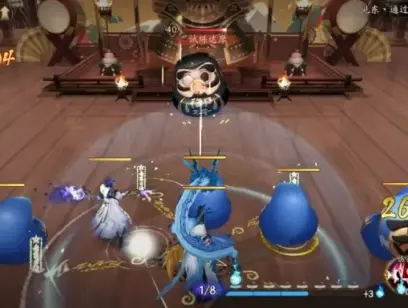
Onmyoji, developed and published by NetEase, launched in September 2016 across iOS, Android, and PC. Set against the supernatural folklore of Japan’s Heian era, it creates a world where humans and spirits coexist. Players step into the role of the onmyoji Abe no Seimei, gradually uncovering fragments of lost memories while forging contracts with shikigami to resolve crises between the two realms. As one of the earliest and most successful Summoners-like games in the Chinese market, Onmyoji has sustained remarkable popularity over the years thanks to its refined equipment and resource systems.
At its mechanical core lies the intricate Souls system paired with the shared “Demon Fire” resource. Turn order is dictated by speed, transforming traditional back-and-forth combat into a high-precision calculation of action bars. By combining four-piece and two-piece Soul sets, a single shikigami can shift roles between control, burst damage, or support. This customization is the foundation of the game’s long-term appeal. Combat requires careful planning: who generates Demon Fire, who manipulates turn bars, who finishes the burst, and when to adjust strategy on the fly. In PVP, the Duel mode introduced a ban-pick system that forces players to draw from their entire roster and engage in intense mind games rather than relying solely on raw stats.
Artistically, Onmyoji maintains a consistently high standard with its stylized Japanese aesthetic. Detailed character models, atmospheric particle effects, and elegant skill animations create a visual experience that feels timeless. Although grinding for perfect Souls demands considerable time, this persistent chase for the perfect stat combination continues to motivate players who love data optimization and steady growth. The sense of reward comes not in a rush but as a slow burn, much like the satisfaction found after resolving a complex task during a calm Jeetbuzz App Download routine.
In contrast, Epic Seven represents the peak of hand-drawn 2D animation in turn-based RPGs. Developed by Super Creative and published by Smilegate Megaport, it first launched globally in 2018 and entered the Chinese market in 2023. Set in the vast fantasy world of Orbis, players act as the “Heir” awakened by the Goddess, gathering allies to resist the Archdemon and break the cycle of a world repeatedly reset. What sets Epic Seven apart is its unmatched animation quality—its battles often feel like watching a fully animated show that just happens to be interactive.
If Onmyoji excels through atmosphere, Epic Seven wins through spectacle. Every ultimate skill is animated frame by frame, with transition-free cut-ins that link character art and combat motion into a single visual flow. In gameplay terms, it is a refined branch of the Summoners-like genre. Five elemental affinities (fire, water, earth, light, dark—three in a loop and two as mutual counters) define matchups, while action-bar mechanics and debuff synergy create layers of tactical decision-making.
Yet what truly distinguishes Epic Seven is the Artifact system. Acting as an additional passive slot, Artifacts reshape a hero’s identity and open entirely new strategies. A support hero might suddenly gain counterattacking potential, or a damage dealer may alter the turn order after striking an enemy. These variables enlarge the tactical sandbox and reward creative compositions. Meanwhile, the game’s late-game RTA—real-time arena—brings global players into fast-paced ban-pick duels (with China currently on a separate server), creating a fierce competitive environment.
Both games represent different interpretations of the Summoners-like blueprint: one leaning into atmospheric world-building and methodical strategy, the other into fluid animation and explosive decision-making. And as players explore these worlds in their downtime, perhaps while glancing through Jeetbuzz App Download updates before beginning another grind session, the appeal becomes clear. Each title provides a long, rewarding journey for those who enjoy building, refining, and mastering teams in a genre where patience and creativity matter just as much as raw power.