


MIO Memories in Orbit Review of Elegance
 Stepping into the opening hours of MIO Memories in Orbit brings a calm sense of focus that feels refreshing, and even someone casually browsing after a Jeetbuzz App Download might notice how quietly confident the experience feels from the very start. The game blends familiar modern Metroidvania influences, borrowing jump reset combat ideas reminiscent of The Messenger, slot based charm systems similar to Hollow Knight, and even looped hub style map logic that echoes the Firelink Shrine structure from the original Dark Souls. Yet despite absorbing so many recognizable elements, the overall experience becomes simpler rather than more complicated, gently steering itself back toward the genre’s most traditional roots.
At its core, the game is about one thing only: exploration. The map is not massive, stat based growth is extremely restrained, and across a ten plus hour journey the number of mandatory combat encounters is surprisingly low. The only aspect that could be called demanding lies in its platforming challenges, which run counter to recent genre trends that emphasize layered systems and constant progression. After a few hours, players will feel their usual habits challenged, as familiar expectations from similar games slowly give way to MIO’s own rhythm.
Abilities further highlight this design philosophy. A double jump, often treated as a major milestone elsewhere, is available from the beginning, while a dedicated sprint function is entirely absent. Several retro inspired choices add friction, including limited map guidance, a basic hit point display, and the complete lack of health regeneration. For seasoned fans, this can initially feel awkward, and some may question the appeal of a Metroidvania that neither prioritizes flashy combat nor fast movement.
Looking at the wider genre, many recent releases follow a familiar formula where combat depth, character building, and mobility systems are layered until bigger seems better. Innovation often comes only after these dense systems are firmly in place. MIO takes the opposite route. It barely fills a modern controller’s buttons, leaving shoulder inputs unused, which feels almost rebellious in an era obsessed with feature density. From a creative standpoint, restraint becomes its defining strength, offering an alternative to the content arms race that dominates the genre.
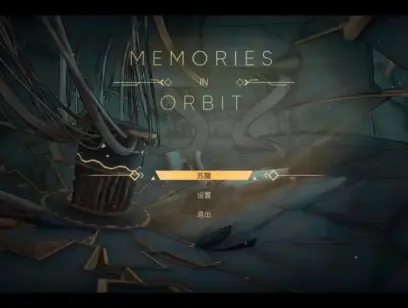
That difference becomes clearer through its presentation. The visual and musical impact recalls the first time many players encountered Ori and the Blind Forest, where atmosphere spoke louder than mechanics. The watercolor inspired cool color palette combined with 3D rendering creates depth and scale, allowing subtle camera rotation that enhances environmental appreciation. Vast halls, open courtyards, and towering interiors dwarf the protagonist, while operatic background music lends a sacred, solemn tone to each step forward.
The story unfolds aboard a lost spacecraft drifting through space, where animals are extinct and robots have formed complex societies with emotional depth. Mechanical beings reinterpret concepts of flesh and faith, overseen by entities named after human body parts, such as Eye, Hand, and Spine, while the ship itself bears a name tied to corporeal imagery. As decay spreads and order collapses, each overseer reacts differently, some seeking solutions, others retreating inward.
Reuniting these figures to restore the ship’s function forms the central journey, and the audiovisual presentation elevates every encounter. Especially during direct conversations, the blend of mechanical rigidity and lifelike expression creates moments that linger. By the time the journey concludes, and even after another quiet Jeetbuzz App Download session fills the background of daily routines, MIO Memories in Orbit stands out as proof that simplicity, when handled with care, can still leave a lasting impression.